
Overview
- Most residential stump grinding cost in Ottawa runs about $150 to $500 per stump, with a minimum charge of roughly $100 to $250 even for a small one.
- The price follows the stump’s width at ground level, measured across the widest part of the root flare. Stumps up to 30 cm (12 inches) are at the low end, and a 100 cm (40 inch) stump can run past $1,000.
- Access, surface roots, hard wood, a high stump and the number of stumps all move the quote.
- Grinding is usually quoted separately from tree removal. Ask whether it is included.
- Grinding leaves most of the roots in the ground. Full stump removal costs more, about $500 to $1,100, and is the right call under patios, driveways, pools and foundations.
- Hauling away the wood chips, adding topsoil and laying new grass are usually extra.
- Ontario law requires a free utility locate before you dig or grind. Call at least 5 business days ahead.
- Spring mud and frozen ground make May to November the best window.
Introduction
Once a tree comes down, the stump is what is left to deal with. It trips people, catches mower blades, can sprout new shoots and can attract insects. Most homeowners want it gone but are unsure what grinding should cost, what is included and whether grinding is even the right fix.
This guide covers what stump grinding usually costs in Ottawa and what moves the price up or down. It also compares grinding with full removal, explains what happens to the roots and wood chips, and covers the utility locate and city tree rules you should know before anyone starts a machine. If you want the spot tidied and planted afterward, KJ Landscape & Design handles that restoration side of the job.
How much does stump grinding usually cost in Ottawa?
For a typical home, expect about $150 to $500 for one stump. Tree services also set a minimum charge to cover the crew, machine and travel, and in Ottawa that is commonly between $100 and $250, even for a very small stump.
Most companies price by diameter. It is measured across the widest part of the stump right where the trunk meets the soil, which is the root flare, not at chest height like a standing tree. As a rough guide for budgeting:
- Up to 30 cm (12 inches): about $100 to $250
- 30 to 60 cm (12 to 24 inches): about $200 to $400
- 60 to 90 cm (24 to 36 inches): about $400 to $650
- 90 cm (36 inches) and up: about $650 to $1,190 or more
That works out to roughly $10 to $20 per inch on small stumps, rising to about $30 per inch on very large ones, because the amount of wood grows quickly as the stump gets wider. Prices usually do not include HST. Treat these as planning ranges, since each company sets its own rates and a site visit will give you the real number.
What changes the price?
Two stumps of the same width can be quoted very differently. These are the usual reasons.
- Root flare and surface roots. Maples, elms and some other species spread wide at the base, and roots running across the lawn also need to be ground to leave a flat surface. More roots mean more time.
- Stump height. If the stump was left tall, more than about 30 cm (12 inches), it takes extra work to cut it down before grinding can start.
- Wood type and condition. Dense hardwoods such as oak and sugar maple wear out cutting teeth faster than softer woods like pine or cedar. An old, dry stump usually grinds faster than a fresh one full of sap.
- Access. A narrow gate, fence or steep slope means a smaller machine, and a smaller machine takes longer. Soft, muddy ground or tight spots near a wall can also add cost. Handlebar-style grinders fit through a gate about 90 cm (36 inches) wide, while larger tracked units need open access.
- How many stumps. Moving a crew and machine is a big part of the price, so extra stumps on the same visit usually cost less each.
- Distance. Rural properties on the edge of the region may carry a travel charge.
A good quote will confirm the depth of the grind, the size of the stump you are being charged for and whether cleanup is included.
Should you grind the stump or remove it completely?
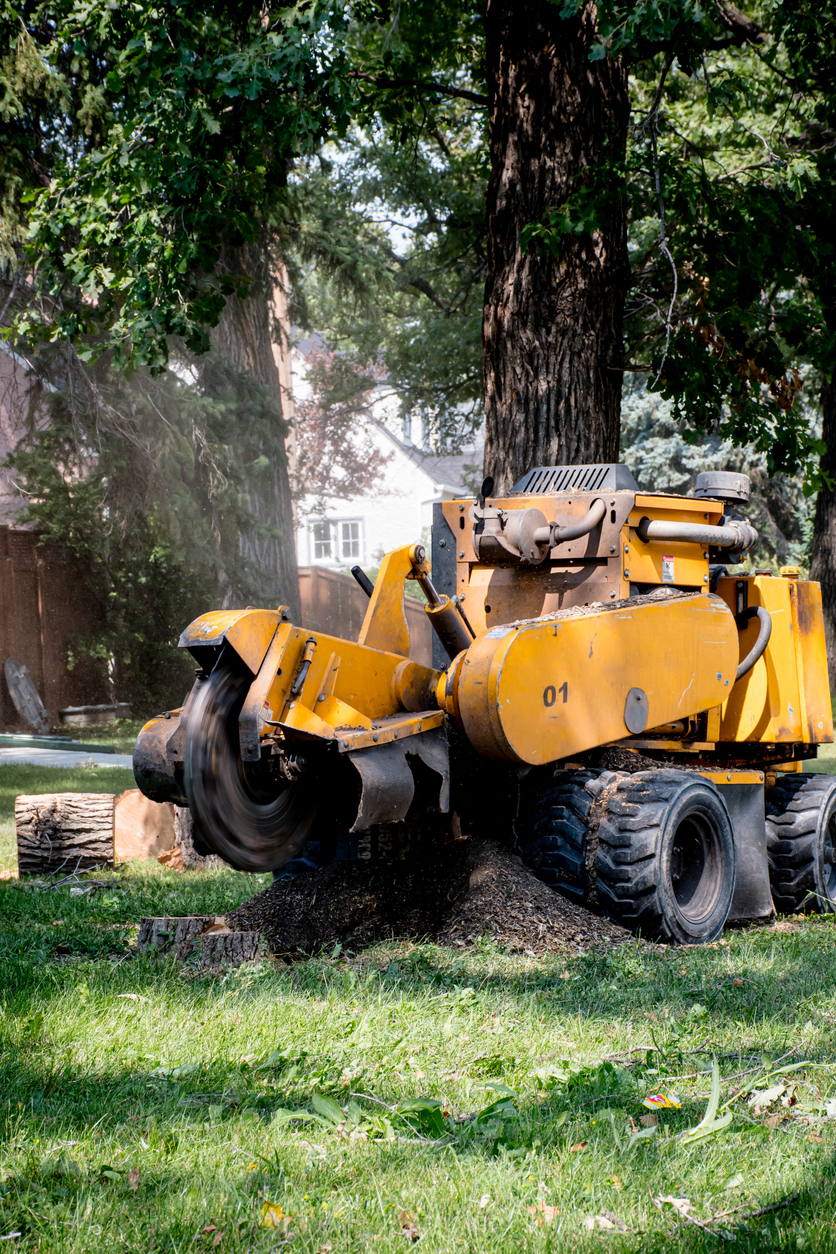
Grinding uses a machine with a spinning, toothed wheel to chew the stump and the top of the main roots into wood chips below ground level. The rest of the root system stays in the soil. It is the usual choice for lawns, garden beds, mulch areas and spots you plan to leave natural, and it is gentler on nearby trees and underground lines.
Full removal is a digging job. An excavator or backhoe digs around the roots, cuts them and lifts the whole root ball out, leaving a large hole that has to be filled and compacted. In Ottawa it typically costs about $500 to $1,100 per stump, noticeably more than grinding.
It is worth paying for removal when something solid will go on top of the spot. Roots decay and leave gaps, and the ground above can then sink. That matters for:
- A concrete patio, a building foundation or a pool
- An interlock driveway or walkway
- A new tree planted right where the old one stood
If you are planning paving over the area, talk to your contractor before the tree comes down. Our guides to interlock driveways in Ottawa and patio design in Ottawa explain why the base under paving matters so much.
How deep is a stump ground, and what happens to the roots?
The usual depth for lawns, mulch and gravel is about 10 to 15 cm (4 to 6 inches) below the surrounding soil. If you plan to plant another tree nearby, ask for a deeper grind, around 15 to 30 cm (6 to 12 inches). It takes longer, so it usually costs more. Put the depth in the quote so there are no surprises.
The roots that remain are cut off from the tree and start to rot. Thin roots can break down in a year or two. Thick roots from oak or sugar maple can take five to ten years or longer. As they decay, small gaps can form and the soil above may dip a little. Topping up the spot with a bit of soil now and then keeps it level.
Some fast-growing trees, including Manitoba maple, willow and poplar, can send up suckers from leftover roots. Grinding deep enough, and cleaning up shoots as they appear, keeps that in check.
What about the wood chips and the hole left behind?
Grinding makes a surprisingly big pile. The chips mixed with soil take up more room than the original stump, and most quotes only include raking them into the hole or into a mound. Hauling all of it away is usually a separate charge of about $100 to $300. Fresh topsoil and new grass are normally extra as well, unless the company offers restoration as an add-on.
What you do with the chips depends on the spot:
- Planting beds with shrubs: Chips work well as a surface mulch.
- Vegetable gardens and seedlings: Do not dig fresh chips into the soil. As they break down they use up nitrogen that young plants need.
- Lawn: Remove the chips, fill the hole with good topsoil and mound it slightly, since it will settle. Then lay sod, or sow grass seed in Ottawa in early fall, when cooler weather and natural rainfall help it establish.
- Paths and natural areas: Chips can be left to break down or spread to keep weeds down.
If you would rather not handle the finishing yourself, a Kanata landscaping company like KJ Landscape & Design can bring in the topsoil, level the area and restore the lawn so the spot blends back in. You can see what we offer at kjlandscapedesign.com.
Can you plant or build on the same spot afterward?
You can put grass, mulch or a garden bed over a ground stump right away, as long as the area is topped up and levelled. A new tree is trickier. Even after a deep grind, the old root plate is still in the soil just beyond the grinder’s reach, so a new tree planted in the exact spot has to compete with decaying wood. The usual advice is to plant at least 1 to 2 metres (3 to 6 feet) away from the old stump.
If the old tree died from a root disease such as armillaria (shoestring root rot) or verticillium wilt, the fungus can stay in the old roots. Choosing a different location, or a species that does not catch that disease, gives the new tree a better chance.
This is also a good moment to rethink the space. A planting plan that suits the new light and shade, whether that is a bed, a shade garden or a new tree, makes the removal pay off. Good landscape design in Ottawa starts with how the yard will be used, and a team such as a landscape company in Manotick or elsewhere across the region can help map that out before any digging begins.
What do you need to check before grinding starts?
Utility locates: A stump grinder cuts 15 to 30 cm (6 to 12 inches) down, which is deep enough to hit electrical, gas, telecom, water and sewer lines. In Ontario, anyone planning to dig, including a homeowner, must request a locate through Ontario One Call before work starts. It is free. Request it at least 5 business days ahead, and note that a locate is valid for 60 days, so a delay means a fresh request. Crews are expected to stay clear of the marks, hand-digging within about 1 metre (3 feet) of them.
Ontario One Call only marks public lines. Sprinkler systems, gas lines to a barbecue or fire pit, power to a shed or garage, lighting wires and electronic pet fences are the owner’s responsibility. If you do not know where yours run, a private locating company can find them. Tell the grinding crew about every private line you know of.
City tree rules: Grinding a stump does not need its own permit, but removing the tree can. Under the City of Ottawa’s Tree Protection By-law, a permit is needed for city-owned trees and for private trees that count as distinctive, generally 30 cm (12 inches) or wider measured at chest height on lots of one hectare or less in the urban area. Trees 10 cm or wider on larger urban lots are also covered. Permit fees are set by the city and change, so check the current amount before you apply. Dead or hazardous trees and ash trees killed by emerald ash borer may be exempt, and the city’s page explains how. If a protected tree is growing nearby, the crew has to keep the grinder off its roots.
Is renting a grinder cheaper, and when is the best time to do it?
Renting looks cheaper, but the numbers are closer than most people expect. Small walk-behind grinders rent for about $80 to $160 a day, and self-propelled models run roughly $155 to $320 a day, with big tracked units higher. Add a trailer, fuel, safety gear and the chance of broken teeth, and a single average stump can cost about as much as hiring a crew, which is typically $150 to $500.
There are real risks too. Small machines can kick back when they hit a rock or a buried root, and tired operators often stop too shallow, which leaves roots that sprout. You are also fully responsible for the utility locate and for any lines you hit. For one or two stumps, hiring a professional is usually the safer choice.
When to book: Late spring to late fall, roughly May to November, is the best window in Ottawa. Frozen ground in winter is hard on the cutting teeth, and many companies wait until spring or charge more. In early spring, thawing ground is soft and a heavy grinder can rut a lawn badly. Fall is a good time if you plan to reseed afterward.
Summary
Stump grinding in Ottawa usually costs about $150 to $500 per stump, with a minimum charge of roughly $100 to $250. Width at the base, root spread, access, wood type and the number of stumps decide where your quote lands. Chip hauling, topsoil and new grass are normally extra, and full removal costs more but is the right choice under paving, pools and foundations.
Before you book, ask whether grinding is included in your tree removal quote, what depth is being ground and what cleanup covers. Request your utility locate at least 5 business days ahead and confirm whether the tree itself needs a city permit.
Once the stump is gone, KJ Landscape & Design can restore the area with fresh soil, sod or planting so the yard looks finished. Get in touch through our website for a site visit.
External resources
- City of Ottawa: Tree Protection By-law, general information
- Ontario Underground Infrastructure Notification System Act, 2012 (Ontario e-Laws)
- Ontario One Call: request a locate before you dig