
Overview
- You can change lot grading in Ottawa on your property, but only if the work does not alter the approved drainage pattern or push water onto a neighbour’s land.
- Once your house is built and the subdivision is assumed by the city, keeping the lot grade in working order is the homeowner’s job.
- Small jobs, such as topping up soil that has settled near the foundation, do not usually need a permit. Larger regrading, hardscaping tied to a building permit, or work on city land can.
- Never fill, pipe or block a swale, and keep sheds, raised beds and fences out of drainage paths. The city can order the work undone at the owner’s cost.
- Water that is still pooling on a lawn after 48 hours points to a drainage problem worth fixing.
- Ask the city for your lot grading plan before you start. The search fee is about $88, plus per-sheet copy fees, and it can take 10 to 15 business days.
- Hire a surveyor, engineer or contractor when there is no plan, a boundary dispute, or a major change in levels.
Introduction
Most people never think about lot grading until water shows up where it should not be: a damp basement wall, a puddle that lingers for days, or an argument with the neighbour over a fence line. By then, the question is usually how to fix it, and whether you are even allowed to.
The short answer is yes, with limits. Ottawa treats the slope of your yard as part of a shared drainage system, so what you do on your side can affect the lots around you. This guide explains what lot grading is, who looks after it, what the city’s rules allow, and when you need a permit. It also covers swales, patios and sheds, the drainage problems Ottawa’s clay and winters tend to cause, and when it makes sense to bring in a professional.
What is lot grading, and who is responsible for it?
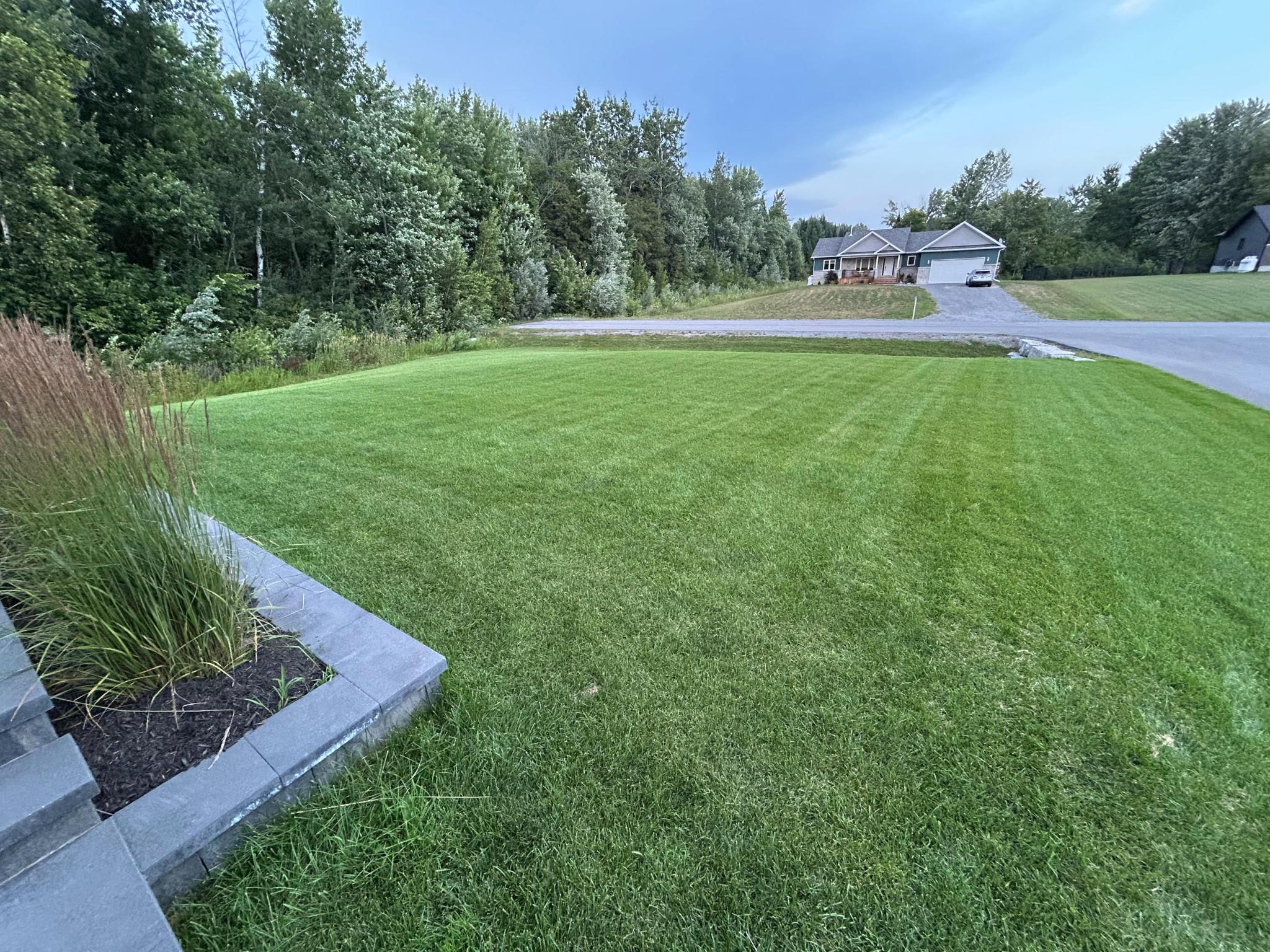
Lot grading is the shaping of the ground so rain and snowmelt run away from your house and toward an approved drainage route. When a subdivision is built, engineers draw up a grading plan for every lot so the whole neighbourhood drains as one system.
A typical Ottawa lot uses a few simple features:
- Slope away from the house. The ground next to the foundation should fall away from it, generally at a slope of about 2 percent (roughly a quarter inch per foot).
- Swales. These are shallow, grassed channels along property lines that carry water to the street or to a rear-yard catch basin. They usually need a slope of at least 2 percent so water keeps moving.
- Front-to-back or split drainage. Some lots drain entirely to the back. Others split, with the front half draining to the street and the back half to a shared rear system.
When the grade is wrong, water collects against the foundation. Over time that leads to damp or flooded basements, mould and cracked concrete, and it can also erode soil and leave standing water in the yard.
Who is responsible? While a home is being built, the builder must follow the city’s approved grading plan. After the house is finished and the subdivision has passed the city’s final inspections, keeping the lot grade as designed becomes the homeowner’s responsibility.
New home warranty. If you bought a new build, Tarion’s warranty covers some grading problems for a limited time. Surface ponding is covered under the one-year warranty, and the year-end form must be sent in during the last 30 days of that year. The two-year and seven-year warranties generally do not cover surface grading or soil settlement. Tarion also excludes damage that results from changes the homeowner makes, such as altering the slope or adding a patio that redirects water. Check your own warranty documents for the exact dates.
Can you legally change your grading, and do you need a permit?
You can, as long as the changes follow the city’s rules and do not hurt neighbouring properties. The main rulebook is the City of Ottawa’s Site Alteration By-law (No. 2024-448, passed in October 2024). It covers removing topsoil, adding fill, changing grades, excavating and creating hard surfaces. Together with the Municipal Drainage By-law, it comes down to a few practical rules:
- Do not work on a neighbour’s land without their written permission. A survey is the reliable way to know where the line is.
- Do not change an approved drainage pattern in a way that sends water onto a neighbour. Filling depressions, blocking swales and redirecting runoff are all off limits.
- Follow the other rules that apply, including the building code, fence, tree protection and pool enclosure by-laws.
- If work takes place within 10 metres (about 33 feet) of a neighbouring private property, give the neighbours advance notice of what is happening and for how long.
- Keep soil on your site with sediment and erosion controls while the ground is exposed.
- Use clean fill only. Rubbish, asphalt, concrete and contaminated soil are not allowed.
When is a permit needed? For small jobs, usually not. Topping up soil that has settled around the foundation, planting beds and lawn repair, including sod installation in Ottawa yards, generally does not need approval, provided drainage paths stay intact. Bigger work is different. A building permit, a road cut permit or site plan approval can apply to significant regrading, large hardscaping tied to a building permit, deep excavation, or heavy equipment crossing city land to reach your property.
Where a building permit is required, the city’s minimum fee is $117, and for renovations that do not add floor area it is about $12.75 per $1,000 of construction value. Fees change each year, so confirm them before budgeting. Very large soil projects can also trigger provincial excess soil rules, which apply from about 2,000 cubic metres and rarely affect a typical backyard.
A retaining wall changes the grade as well. If one is part of your plan, our guide on whether you need a permit for a retaining wall in Ottawa explains the height rules.
What about swales and neighbour disputes?
Swales do the quiet work of carrying water off your lot, so the city is strict about them. They should never be filled, piped or blocked, and sheds, raised gardens and fences should stay out of them. If you block a shared swale, the water has to go somewhere, and it usually ends up on the neighbour’s yard or against their foundation.
If a neighbour’s project is sending water your way, the city suggests talking to them first. Many problems, such as a downspout pointing the wrong way, are fixed with one conversation.
If that does not work, you can report it by calling 3-1-1. A by-law officer can look at the site and compare it to the approved grading plan. If they find a violation, the city can issue a corrective work order requiring the owner to remove the obstruction or fill and restore the original grading. The owner pays for that work, which can get expensive if equipment is needed to rebuild a swale.
If the argument is really about where the property line sits, the city does not decide that. Only a registered Ontario Land Surveyor can define the boundary.
How do patios, driveways, pools and sheds affect drainage?
Anything that changes the shape or the permeability of your yard changes where water goes. Check these before you build.
- Patios and walkways. Paving reduces the area where rain can soak in. A patio built without a proper stone base, or set too high against the house, can act like a dam and hold water against the foundation or push it toward the neighbours. Good patio design in Ottawa starts with the slope, not the pattern.
- Front yard surfaces. The city generally limits hard surfaces in a front yard, including the driveway and walkways, to about half of the lot frontage, with the rest kept as soft landscaping. Artificial turf does not count as soft landscaping.
- Driveways. A driveway should not slope so steeply that water rushes onto the street or a neighbour’s lot. A slope of about 6 percent is a common target, with 8 percent as a typical maximum. Widening one usually also means keeping a setback from the property line and staying clear of roadside ditches. Rules differ by situation, so confirm yours before you pour or lay anything.
- Pools. Digging a pool moves a lot of soil, and that soil has to be handled under the clean fill and excess soil rules. The deck also needs to be sloped so splash-out does not run onto the next yard. This is worth planning early with any team handling pool installation in Ottawa.
- Sheds. A shed roof collects a lot of rain. Placed in a swale or tight to a property line without gutters, it can choke the drainage path and drop water on the neighbour’s side.
The common thread is to keep water moving along its original route, and to check the grading plan first.
What drainage problems are common in Ottawa, and what fixes them?
Ottawa’s soil and weather make some problems more likely than in other cities.
- Clay soil and flat lots. Much of the city sits on dense marine clay that soaks up water slowly. On a flat lot, water tends to sit. If a lawn is still wet 48 hours after rain, that is a sign the drainage needs attention. Mixing compost or other organic matter into the top 30 centimetres (about 12 inches) of soil can open up the clay and help water get in.
- Frost and spring melt. Water expands about 9 percent when it freezes. Ice forming near a foundation, in a blocked swale or under a patio can lift slabs, warp decks and stress foundation walls. In spring, a lot of snowmelt runs over frozen ground, so this is the time the grade is tested most.
- Settled backfill. The soil around a new foundation was loose when it went in, and it usually settles over the first three to five years. That leaves a dip right next to the wall. The fix is to add clean topsoil and tamp it down to restore a gentle slope away from the house, then reseed or lay sod.
- Downspouts. A well-graded lot can still flood if the downspouts dump next to the wall. Extend them at least 1.2 metres (4 feet) from the foundation, onto a lawn or other soft surface on your own property. Do not aim them at a neighbour, a public sidewalk or a city easement, where they also create ice hazards in winter.
If your property is near a river, creek, wetland or steep slope, a conservation authority such as the Rideau Valley Conservation Authority may also need to approve any grading work, and there are setback distances to respect. Contact them before you plan the job.
How do you find your lot grading plan?
The approved lot grading plan shows how water is meant to move across your lot, so it is the first thing to look at before you change anything. The City of Ottawa keeps historical permit records, and the property owner, or someone they authorize, can request copies through the Access to Building Permit Records program.
You apply online through the MyServiceOttawa portal or in person at a Building Code client service centre, with a signed application and proof of ownership. Current fees are:
- About $88 for the search, which is non-refundable
- About $13.20 plus HST for each sheet copied, such as the grading plan
- About $140 for a full residential compliance summary report, if you are buying or selling
Expect roughly 10 to 15 business days. The city does not guarantee it will find a plan, especially for older homes. If none is on file, call 3-1-1 to ask what else is available. Your builder, your lawyer’s closing package or a past survey may also have a copy.
When should you hire a professional, and what does it cost?
Topping up settled soil near the foundation is a reasonable weekend job. Anything bigger usually calls for help.
- An Ontario Land Surveyor when there is a dispute over a swale or lot line. Only a registered surveyor can legally define the boundary.
- A civil engineer or grading consultant when your property has no grading plan, when you are making large changes in levels, or when a project needs stormwater controls for city approval.
- A contractor with the right equipment for the actual regrading. A good Ottawa landscaping company will use laser levels to set swale slopes, protect tree roots and haul excess soil away legally.
As a rough budget guide, these are general Ontario figures and will vary with your lot:
- A survey and engineered grading plan: about $1,500 to $3,500
- Regrading by a landscape contractor, including clean fill and rebuilding swales: about $3,000 to $8,000 or more, rising quickly if heavy clay has to be dug out and hauled away
- Exterior foundation waterproofing, if poor grading has already caused damage: about $150 to $250 per linear foot
Fixing the grade early is almost always cheaper than waterproofing a basement later.
Summary
You can change the grading on your Ottawa property as long as water keeps following its approved route and none of it ends up on a neighbour’s land. Minor fixes, like adding soil where the backfill has settled, rarely need approval. Larger regrading, work tied to a building permit, or anything on city land is where permits and fees come in.
Before you start, get your lot grading plan, keep swales clear, and check how any patio, driveway, pool or shed will change the flow of water. If there is no plan, a boundary dispute or a big change in levels, bring in a surveyor, engineer or contractor early. A small amount spent on grading now is far cheaper than repairing a wet basement.
If your yard has drainage issues and you want a second opinion, you can contact KJ Landscape & Design to talk through what is possible.