
By KJ Landscape & Design Team | Reviewed by our Certified Arborist | Updated July 2026
Key Takeaways
Understanding the nuances of tree maintenance is essential for managing your property safely and efficiently. These five points summarize the critical differences between felling and complete removal projects.
- Felling a tree is the specific process of cutting the stem to guide the trunk to the ground in a controlled direction.
- Full tree removal encompasses felling plus the necessary cleanup of debris, logs, and stumps.
- Assessing safety hazards like tree lean and power line proximity is the first step in any operation.
- Municipal regulations in Ottawa may require specific permits for removing certain tree species or sizes.
- Professional assessments help identify the difference between a simple clearing job and a complex removal project.
What’s the Difference Between Tree Felling and Tree Removal?
Many Ontario homeowners use the terms interchangeably, but professional arborists recognize a distinct gap between the two operations. Felling a tree (sometimes searched online as “treefelling”) essentially focuses on the act of directing a tree to the ground using specific directional cuts. This is often just one small piece of a much larger arboriculture puzzle.
In contrast, tree removal is a comprehensive service that leaves your property ready for new development or landscaping. It includes the structural takedown but carries the project through to final site restoration. When you hire an expert for professional tree removal services in Ottawa, you are paying for the total clearing and cleanup rather than just the initial cut.
Choosing the incorrect method can lead to unexpected cleanup costs or safety risks on your property. Understanding these definitions helps you communicate effectively when requesting quotes from experts. A clear distinction ensures that your end goal, whether it is clearing land for a new patio or simply dealing with a dead specimen, is met without lingering hazards.
Felling a Tree Explained: How the Process Works
Tree felling in Ottawa relies on precise physics to control the descent of a trunk. It is an exacting skill that balances the geometry of the tree against the environmental constraints of the surrounding area. The process is strictly dictated by the tree’s natural growth pattern and physical makeup.
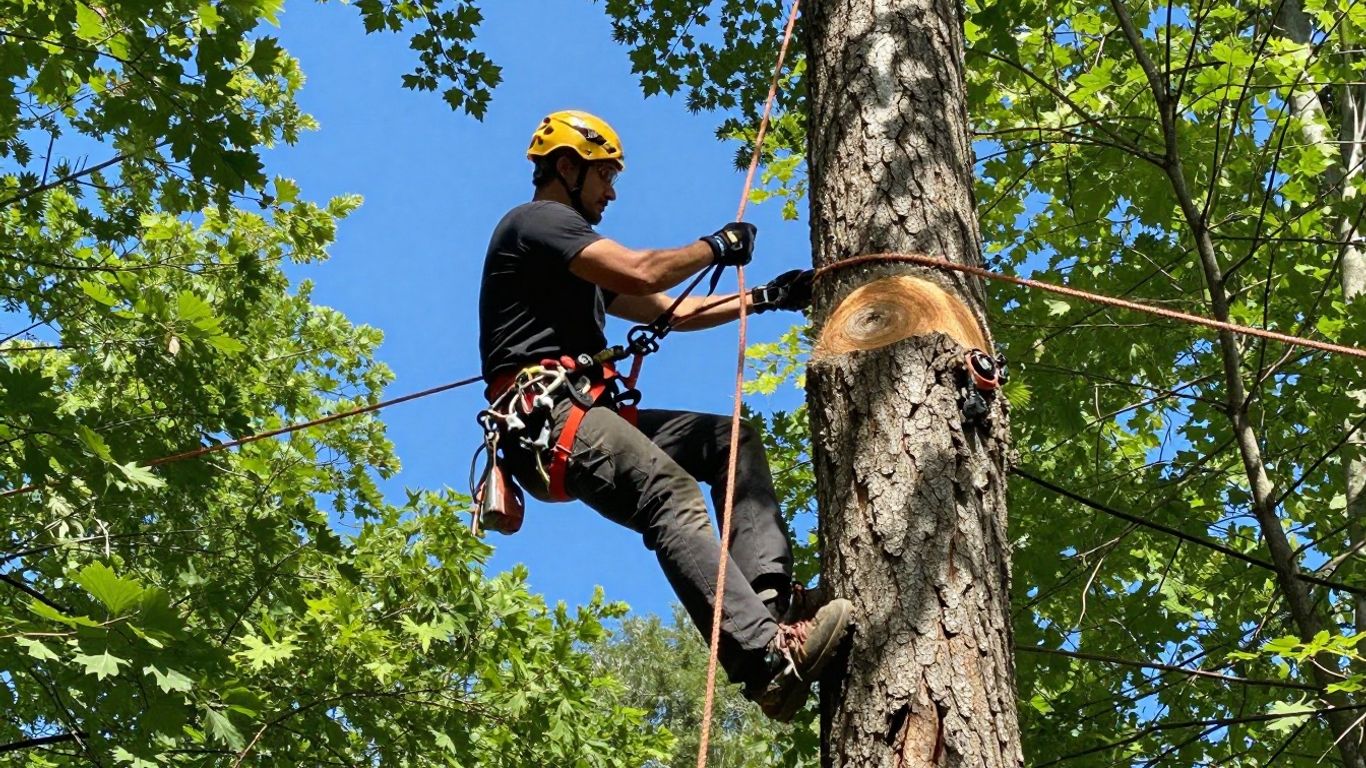
How Felling a Tree Actually Works in Ottawa (Cuts, Fall Direction, Equipment)
The methodology behind felling a tree revolves around a series of strategic cuts known as the notch and the back cut. By crafting a specific wedge on the side you want the tree to lean, you create a controlled hinge that guides the tree’s fall direction.
- The undercut determines the fall path.
- The hinging wood provides support during movement.
- Strategic boring or back cuts complete the separation.
These techniques rely on the arborist’s ability to interpret weight distribution, ensuring the tree lands in a designated clear zone without impacting surrounding assets. Our crew follows the ANSI A300 pruning and removal standards set by the International Society of Arboriculture, the industry benchmark used by certified arborists across North America.
When Felling a Tree Alone Is the Right Call (Rural Ottawa Lots, Land Clearing)
Felling a tree without full removal is typically reserved for large, rural parcels where logs can be left to decay or processed on-site. If you are interested in land clearing services in Ottawa for a large building site, you might initially strip the area through simple felling. This approach minimizes upfront equipment-heavy lifting costs when the stump and root cleanup can wait for the final grading phase.
Tree Removal Explained
Tree removal is the holistic completion of a tree management project. It goes beyond the initial separation of the trunk from the ground to address the aftermath of the project effectively. This service is designed to restore the aesthetic and functional utility of your outdoor space.
What’s Included Beyond Cutting the Tree Down
The scope of a professional removal project covers the entire lifecycle of the tree extraction. Following the initial felling, crews must categorize the material for transport or processing. The following table illustrates what you can expect standard removal to cover vs. simple felling.
| Process Component | Felling Only | Full Tree Removal |
|---|---|---|
| Directional Cutting | Yes | Yes |
| Limb Processing | No | Yes |
| Stump Extraction | No | Yes |
| Site Cleanup | No | Yes |
This table highlights why a comprehensive package is valuable. Investing in the full scope prevents a mess that could block your backyard for seasons.
Stump, Debris & Site Cleanup
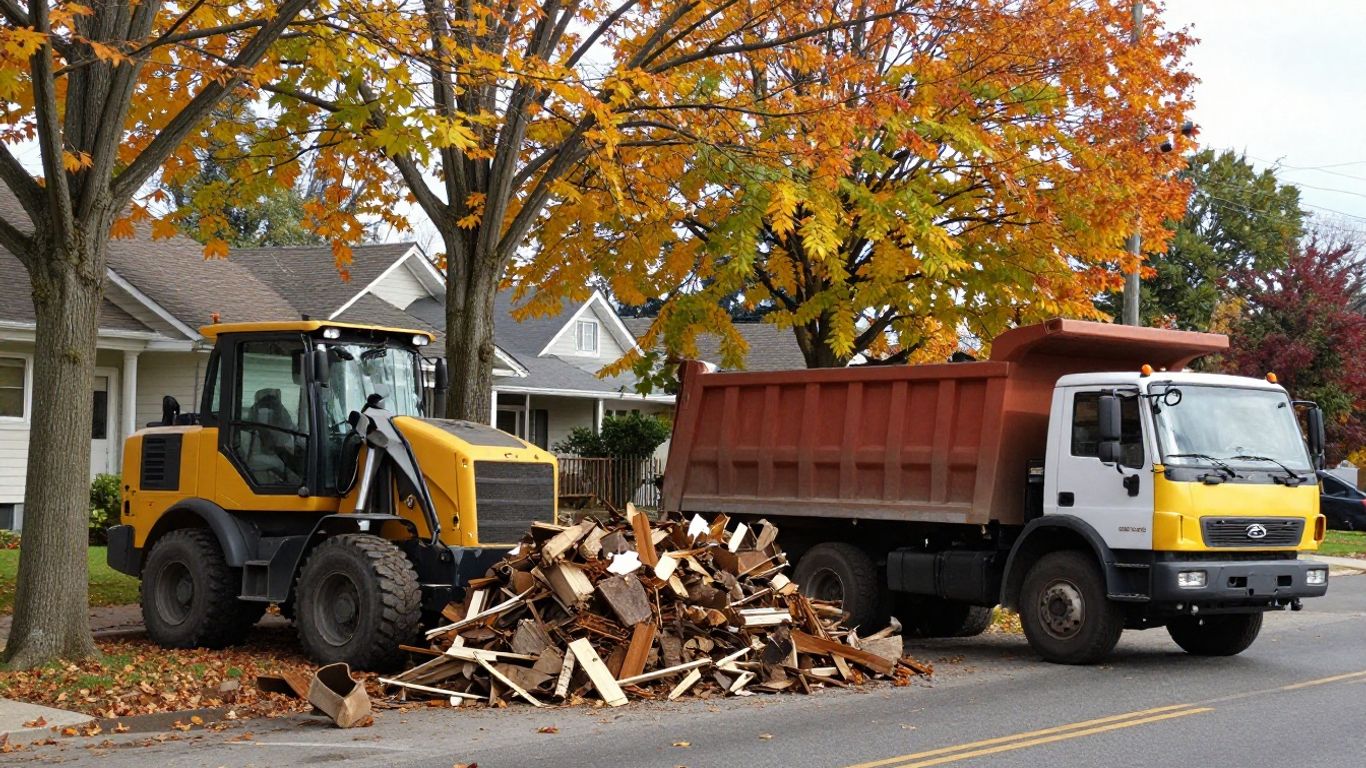
Once the primary weight of the tree is gone, the secondary work begins. Clearing away branches (known as brushing) reduces the fire hazard and physical clutter on your lawn. Professionals also handle the stump, which is the most stubborn part of the job.
Depending on your needs, stump grinding service in Ottawa is used to turn the leftover wood into manageable mulch. This leaves your lawn flat and ready for immediate landscaping, which is a major benefit over leaving a stump to rot for years. If you’re planning new softscaping in Ottawa once the stump is gone, a clean, level base makes that next step far easier. For expert tree removal projects, KJ Landscape & Design ensures that no trace remains once the primary work is finished.
Felling vs Removal: Cost, Safety & Scope Compared
When comparing costs, remember that removal inherently costs more than felling, reflecting the equipment and labor hours required to dispose of large volumes of wood. Site access, disposal fees, and the complexity of the landscape determine the final invoice. It is not just about the tree; it is about the hours spent tidying the surroundings to your satisfaction.
Safety is the bedrock of these operations, as toppling large timber creates significant physical tension and kinetic risks. Experienced crews mitigate these by establishing clear zones and using heavy-duty rigging to ensure the wood does not snap or rebound unexpectedly. Professionals manage these risks by applying sophisticated cutting techniques and safety protocols every single time.
Ultimately, the scope shift is what changes your property value post-project. A full removal project by KJ Landscape & Design leaves your garden refreshed and functional, whereas a basic felling leaves the site as a work-in-progress. Discussing your desired end-state with your contractor determines whether you are paying for a quick cut or a transformative service.
How to Tell Which One Your Property Actually Needs
Deciding between felling a tree and full removal comes down to your long-term goals for your Ottawa property. A simple cut might suffice for woodland management, but a backyard garden requires a thorough approach. Evaluating the tree’s health against your spatial constraints tells you exactly which way to go.
Signs You Need Full Removal (leaning trunk, disease, proximity to structures)
You definitely need full removal if the tree exhibits dangerous decay, an aggressive lean towards your house, or evidence of pests. Diseases can spread quickly to neighboring plants, meaning leaving a rotting stump or dead wood could threaten your remaining healthy landscape. Additionally, any tree within falling distance of a building or power line is a liability that should be removed entirely.
Signs Felling a Tree Alone Will Do the Job
Simple felling is often enough if the tree is healthy, far from structures, and you possess the equipment to handle the debris yourself. This is common on large acreages or when thinning out a grove for fire mitigation.
- Plenty of room for the tree to land.
- No nearby structures, power lines, or fences.
- Tree is healthy and not diseased.
- Minimal impact on surrounding landscape vegetation.
These signs suggest that felling a tree on its own is manageable as a localized cutting task rather than a comprehensive landscape overhaul.
Ottawa Tree Bylaws & Permit Basics
Ottawa maintains strict regulations regarding the preservation of specific tree species and sizes within the city limits. Before you commit to felling a tree, it is critical to confirm whether your specific specimen falls under protected categories. Ignoring these rules can lead to significant municipal fines and legal complications for homeowners.
Consulting the City of Ottawa’s Tree Protection By-law is the first duty for any property owner considering felling a tree in the city. Many residential lots have trees deemed significant for their size or heritage status. An arborist from KJ Landscape & Design can help identify if your tree is listed or requires a municipal permit before any work starts.
Taking the time to check permit requirements ensures that you do not face regulatory setbacks during your project. Most reputable firms operating in the region will handle the documentation for you as part of the service package. If you rush into this process without due diligence, you might find your project halted mid-operation by city inspectors.
Get a Professional Tree Assessment From KJ Landscape & Design
Evaluating the structural integrity of your trees is something that requires a trained eye and field experience. Professionals recognize the subtle signs of internal rotting, pest-induced crown thinning, and root instability that an average homeowner might ignore. Bringing in KJ Landscape & Design provides you with an objective assessment of whether your specific tree needs immediate removal or can continue to thrive with careful management.
Our process begins with an on-site evaluation to categorize your tree’s health and risks. We look at the species, the surrounding hardscape, and the prevailing wind conditions to ensure any proposed action – whether it is felling or full removal – is the safest possible choice. This baseline prevents unnecessary waste and keeps your landscaping budget on track.
Choosing a professional means you have reliable, insured experts managing the site from start to finish. Reach our Ottawa team directly at (613) 229-0213 before you attempt felling a tree on your own. We handle the physical labor, the debris transport, and the compliance paperwork, letting you focus on how to use your newly opened outdoor space. Considering felling a tree on your Ottawa property? Call KJ Landscape & Design at +1 (613) 229-0213 to schedule your walk-through and get a clear, professional picture of your tree’s future.
Conclusion
Choosing between felling and full removal is a decision that affects your property’s safety, aesthetics, and overall maintenance workload for years to come. By weighing the technical requirements against your specific goals – and ensuring full compliance with local regulations – you can ensure that the project enhances rather than hinders your outdoor space. Whether you are dealing with a simple maintenance cut or a complete site clearing, acting with professional guidance remains the smartest path forward.
Frequently Asked Questions
Is felling a tree yourself safe to do in Ottawa?
While property owners can technically handle small trees, felling a tree without professional training is highly risky due to the extreme danger of heavy machinery and falling timber – especially near homes, fences, or power lines common on Ottawa lots.
How is felling a tree different from topping?
Felling involves removing the entire tree from the base, whereas topping is the harmful practice of cutting off the main stem or crown, which can kill or destabilize the tree.
What do professionals do with the logs after removal?
Logs are typically either chipped into mulch for nutrient cycling or transported to specialized facilities for repurposing into lumber or firewood.
Does every tree need a permit for removal?
No, many small or non-native trees do not require permits, but protected species or trees with specific trunk diameters often do need municipal approval.
What is the advantage of stump grinding over digging?
Stump grinding is faster, less invasive to the surrounding landscape, and results in wood chips that can be used directly as valuable mulch in your garden.
How long does the entire removal process usually take?
Most routine removals for single trees are finalized within a single working day, although large, complex, or hazardous trees may require several days to complete.
When is the best season to remove a tree?
Winter is often the preferred time for removal, as trees are dormant, the ground is harder for heavy equipment, and the lack of foliage makes the arborist’s work clearer.