
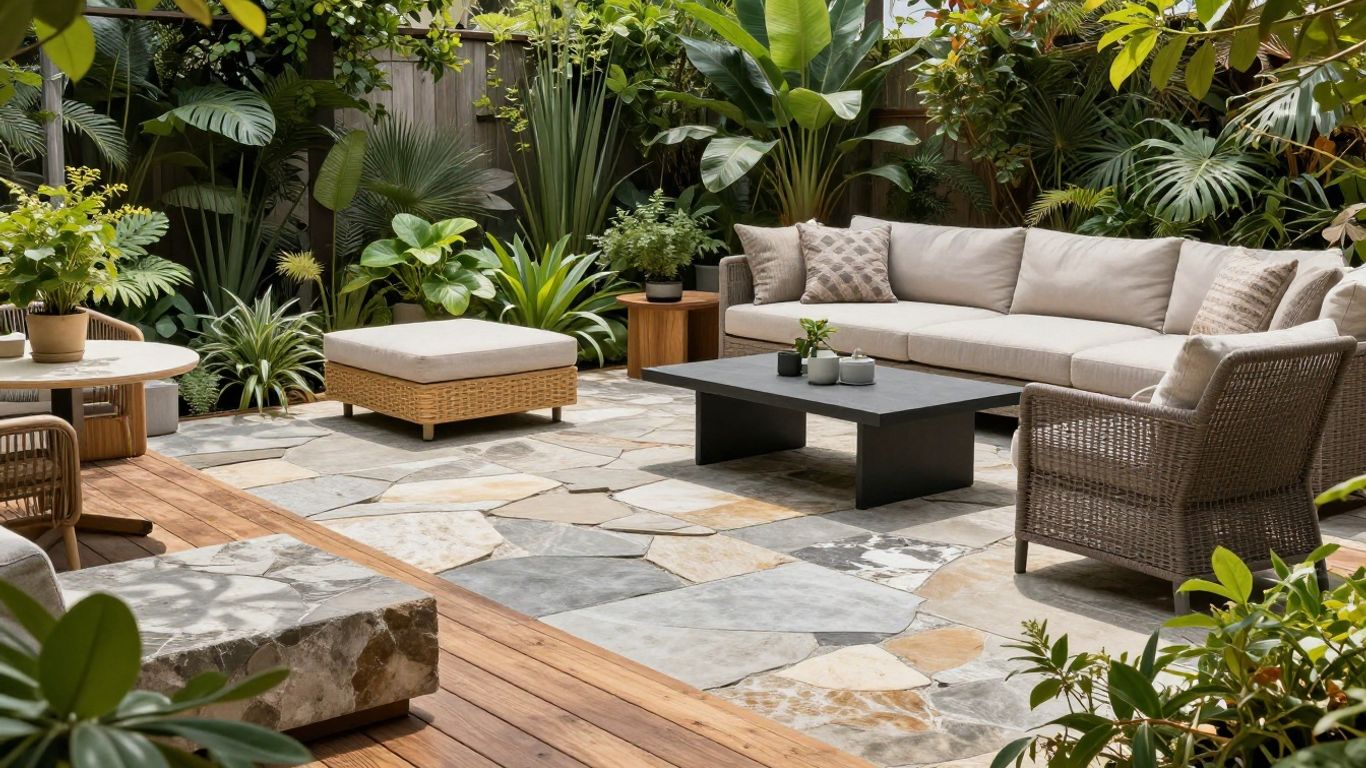
Thinking about adding a patio or maybe upgrading the one you have? It’s a big decision, and picking the right stuff for it matters more than you might think. It’s not just about how it looks, though that’s part of it. What you choose affects how long it lasts, how much work it’ll be to keep it looking good, and even how comfy and safe it is to hang out on. Plus, with so many patio material choices out there, it can get a little confusing. Let’s break down what you need to know to make a good choice for your backyard.
Key Takeaways
- Your patio material choice impacts its lifespan, how much upkeep it needs, and your outdoor comfort.
- Popular options include concrete, natural stone, brick, pavers, and wood or composite decking, each with different pros and cons.
- Consider your local weather, how much you want to spend, and how much maintenance you’re willing to do when choosing.
- The style of your home and garden should also guide your material selection for a cohesive look.
- Comparing materials side-by-side, getting samples, and thinking long-term will help you make the best patio material choices.
Why Choosing the Right Patio Material Matters

Picking the right stuff for your patio isn’t just about looks, though that’s a big part of it. It really affects how long your patio lasts, how much work it takes to keep it looking good, and even how comfortable and safe it is to use. Think about it: it is basically an extension of your home, a place where you’ll be spending a lot of time relaxing, entertaining, or just enjoying the outdoors. Getting the material wrong can lead to headaches down the road, like cracks, fading, or surfaces that get too hot to walk on.
Impact on Longevity and Maintenance
The material you choose directly influences how long it will stick around and how much effort you’ll need to put into keeping it in shape. Some materials, like natural stone, are incredibly durable and can last for decades with minimal upkeep. Others might require more attention, like sealing wood or cleaning out weeds from between pavers. A well-chosen material means less time spent on repairs and more time enjoying your outdoor space.
Here’s a quick look at what to expect:
- High Maintenance: Materials that might need regular sealing, staining, or protection from the elements.
- Medium Maintenance: Materials that require occasional cleaning, weeding, or minor repairs.
- Low Maintenance: Materials that are very durable and need little more than a sweep and occasional wash.
Effect on Outdoor Comfort and Safety
Comfort and safety are huge. Imagine stepping barefoot onto a patio surface that’s scorching hot in the summer sun – not fun. Or maybe a surface that becomes dangerously slippery when wet, especially if you have kids or older folks around. The material’s texture, heat retention, and slip resistance are all key factors. For instance, some darker materials absorb more heat, while lighter, more porous options might stay cooler. Choosing wisely means a patio you can actually use and enjoy without worry, no matter the weather. It’s also important to consider how well the material drains, especially if you live in a rainy climate. You don’t want puddles lingering after a shower, which can lead to mold or slippery spots. Proper ground preparation, like ensuring good drainage, is key for any patio, and the material choice plays a role in how well water moves away from the surface. For more on getting your ground ready, check out tips on laying sod.
The right material can make a big difference in how you experience your backyard. It’s not just about what looks good, but what feels good underfoot, how safe it is, and how much work it’ll be to keep it that way.
Style and Aesthetic Considerations
Of course, you want it to look good! The material sets the whole tone for your outdoor area and should ideally complement your home’s architecture and your garden’s style. A rustic brick patio might look fantastic with a traditional home, while sleek concrete or modern pavers could be perfect for a contemporary house. Think about the colors, textures, and patterns available. The goal is to create a cohesive and attractive outdoor living space that you’re proud of.
Popular Patio Material Options
When you’re thinking about building a patio, you’ve got a bunch of different materials to pick from. Each one brings its own vibe and practical stuff to the table. Choosing the right patio material options really sets the stage for how you’ll use and enjoy your outdoor space. Let’s break down some of the most common patio material choices.
Concrete
Concrete is a super popular choice, and for good reason. It’s pretty budget-friendly and can be shaped into almost any form you can imagine. You can go with a simple poured slab, or get fancy with stamped concrete that mimics the look of stone or brick. It’s generally low maintenance, but it can crack over time, especially in places with freeze-thaw cycles.
- Pros: Affordable, versatile in design, relatively easy to clean.
- Cons: Can crack, may not look as high-end as other options, can get hot in direct sun.
Natural Stone
For a really natural and high-end look, natural stone is hard to beat. Think flagstone, slate, bluestone, or limestone. These materials have unique colors and textures that add a lot of character. They’re incredibly durable and can last for ages, often holding their color better than other materials. Plus, they tend to blend in nicely with garden settings.
- Pros: Beautiful, natural look, very durable, long-lasting, unique character.
- Cons: Can be more expensive, installation can be more complex, some types can be slippery when wet.
Brick
Brick has a classic, timeless appeal. It’s a solid choice that works well with many home styles, especially traditional ones. Bricks are pretty durable and don’t get as scorching hot as some other materials. They can, however, shift over time if not installed on a proper base, and weeds can pop up between the joints.
- Pros: Classic look, good durability, stays relatively cool.
- Cons: Can be more expensive than concrete, potential for shifting, weeds in joints.
Pavers
Pavers come in a huge variety of materials, including concrete, brick, and natural stone. They’re laid individually, which means if one gets damaged, you can often just replace that single piece. This makes them a great option for repairs. They offer a lot of design flexibility with different shapes, colors, and patterns.
- Pros: Repairable, wide range of styles and colors, durable.
- Cons: Installation can be labor-intensive, weeds can grow between joints if not properly sealed.
Wood or Composite Decking
While technically a deck, many people use wood or composite materials for their patio areas, especially if they need to build up from uneven ground. Wood offers a warm, natural feel, but it requires regular maintenance like sealing and staining to prevent rot and fading. Composite decking is a lower-maintenance alternative made from recycled materials and plastic, designed to look like wood but without the upkeep.
- Pros: Creates a raised living space, wood offers natural beauty, composite is low maintenance.
- Cons: Wood requires significant upkeep, composite can be expensive upfront, can get hot.
When you’re weighing your patio material choices, think about how you’ll actually use the space. Will you be barefoot? Do you plan on hosting big dinners? Considering these everyday uses will help you pick a material that’s not just pretty, but also practical for your lifestyle.
How to Match Patio Material to Your Needs
Picking the right stuff for your patio can feel like a puzzle, right? You want something that looks good, lasts a while, and fits how you actually plan to use the space. It’s not just about looks; it’s about making sure your outdoor area works for you.
Consider Your Climate
Think about where you live. If you get a lot of sun, some materials can get super hot underfoot, making it uncomfortable to walk barefoot. On the flip side, if you deal with freezing temperatures, you’ll want something that can handle the expansion and contraction without cracking. Materials like concrete can get quite warm, while certain stones might stay cooler. It’s also worth thinking about moisture. If it is near a pool or gets a lot of rain, you’ll need a surface that isn’t slippery when wet. Some materials, like certain types of brick or wood, might need more attention in damp conditions.
Budget and Maintenance Preferences
Let’s talk money and effort. Some materials are cheaper upfront but might cost more in upkeep over time. For instance, natural stone often has a higher initial price tag and can be trickier to install because each piece is unique. Concrete pavers, on the other hand, can be more budget-friendly and easier to lay. But then you have to think about maintenance. Do you want to spend your weekends sealing and staining, or would you prefer something more low-key? Composite decking, for example, usually requires less maintenance than traditional wood. It’s a trade-off between upfront cost, installation time, and how much work you’re willing to put in later.
Here’s a quick look at some common choices:
- Concrete Pavers: Generally affordable, lots of style options, but can get hot and may need sealing.
- Natural Stone: Beautiful and durable, stays cooler than concrete, but more expensive and installation can be complex.
- Brick: Classic look, good durability, but can be prone to weeds between joints and may need sealing.
- Wood/Composite Decking: Warm look (wood) or low maintenance (composite), but wood needs regular upkeep, and both can be slippery when wet.
Style Matching with Your Home and Garden
It should feel like a natural extension of your home and yard. Think about the overall look you’re going for. A colonial-style house might look great with a classic brick patio, while a modern home could pair well with sleek concrete or large-format pavers. Consider the colors and textures too. Do you want something that blends in or stands out? You can even get concrete pavers designed to mimic the look of natural stone or brick, giving you flexibility. It’s all about creating a cohesive outdoor space that you’ll love spending time in. You can explore different layout ideas to create the ideal patio that fits your home’s vibe.
Tips for Making the Right Decision
So, you’ve thought about how you’ll use it, what it should look like, and maybe even what kind of climate you’re dealing with. That’s a great start! But before you commit, let’s talk about a few more things to make sure you’re totally happy with your choice for years to come.
Compare materials side by side (durability, cost, style)
It’s easy to get excited about one material, but really, taking a moment to compare your top choices head-to-head is super important. Think about it like this:
- Durability: How well will it hold up to foot traffic, furniture dragging, and maybe even kids playing? Some materials scratch or chip more easily than others.
- Cost: Don’t forget to factor in not just the price of the material itself, but also the installation labor. Some materials are trickier and take longer to put in, which bumps up the price.
- Style: Does it fit with your house? Does it feel right for your garden? Sometimes a material looks great online but clashes with your home’s vibe.
Here’s a quick look at how some common options stack up:
| Material | Typical Cost (Material + Install) | Durability | Maintenance Level | Style Notes |
|---|---|---|---|---|
|
Concrete |
$ |
Good |
Low |
Versatile, can be stamped or colored |
|
Natural Stone |
$$$ |
Excellent |
Low |
Unique, natural variations, can be uneven |
|
Brick |
$$ |
Very Good |
Low |
Classic, traditional look |
|
Pavers (Concrete) |
$$ |
Good to Very Good |
Low |
Wide variety of colors, shapes, and patterns |
|
Wood Decking |
$$ |
Fair to Good |
High |
Warm look, requires sealing/staining |
|
Composite Decking |
$$$ |
Very Good |
Low to Medium |
Durable, low maintenance, can mimic wood |
Seek professional advice or sample materials
Don’t be afraid to ask for help! Landscape designers or experienced contractors have seen it all. They can offer insights you might not have considered, like how a certain material handles extreme heat or freezing temperatures. Also, try to get your hands on samples. Seeing a small piece of material is one thing, but seeing a larger sample, or even better, seeing it installed in a similar setting, can make a huge difference. Many companies will let you take samples home or have them on display at their office. This is a great way to visualize what the material will look like in your own space.
Plan for long-term enjoyment
Ultimately, you want something that you’ll love for a long time. Think about how the material will age. Will it fade? Will it become slippery? Will it require a lot of upkeep down the road? Choosing a material that’s not only beautiful now but also holds up well over the years means less stress and more time spent enjoying your outdoor oasis. It’s about creating a space that adds value to your home and your life, not one that becomes a constant chore.
Conclusion
So, picking the right stuff for your patio isn’t just about making it look good, though that’s a big part of it. It’s really about how you plan to use the space. Think about whether you’ll be barefoot in the summer, hosting big dinners, or just want a quiet spot to read. Your budget matters too, of course, and what kind of look fits your house and yard. By taking a moment to consider these things – your personal style, how you’ll use it, and what you can spend – you can pick a patio material that you’ll really enjoy for a long time. It’s about creating an outdoor area that works for you and your life.
Frequently Asked Questions
What’s the most important thing to think about when picking patio stuff?
The most important thing is to pick something you really like! Think about what you’ll do on your patio, like walking barefoot in the summer or hosting parties. Also, consider if it’s near a pool, as some materials get slippery when wet or super hot.
What are some common patio materials?
Some popular choices include concrete, which is very adaptable; natural stone, which looks fancy and lasts ages; brick, a classic choice that’s tough; pavers, which come in many styles like concrete or brick; and wood or composite decking, which gives a warm feel.
How does the weather affect my patio material choice?
Your local weather matters a lot. If you have freezing winters especially in Ottawa, you’ll want a material that won’t crack from the cold. Hot summers mean you should think about materials that don’t get too hot to walk on. Some materials also handle rain better than others.
Is there a cheap patio material option?
Bark chippings are often the cheapest, but they need to be topped up. Gravel is also affordable. For a more solid option that’s still budget-friendly, consider poured concrete or concrete pavers, though installation costs can add up.
Which patio materials last the longest?
Natural stone and porcelain pavers are known for being super durable and can last a lifetime if put in right. Granite stone is also very tough and doesn’t crack easily, especially in cold weather.
How can I be sure I’m making the right choice?
It’s a good idea to look at different materials side-by-side, comparing how tough they are, how much they cost, and how they look. You can also ask experts for advice or get samples to see how they’ll look in your yard before you decide.