
By KJ Landscape & Design Team | Reviewed by KJ Landscape & Design’s Certified Landscaping & Tree Removal Specialists | Updated August 2026
Key Takeaways
Ottawa yards need privacy planting that can handle cold winters, changing soil moisture, and limited urban space.
- Eastern white cedar and spruce are dependable evergreen choices for Ottawa screens.
- Fast growth matters, but mature size and planting space matter just as much.
- Evergreen privacy trees provide year-round coverage, while deciduous trees add seasonal light and colour.
- Good spacing, suitable sunlight, and prepared soil help a screen stay healthy.
- Professional selection and planting can prevent costly mistakes around roots, drainage, and local requirements.
Why Choosing the Right Privacy Trees Matters in Ottawa
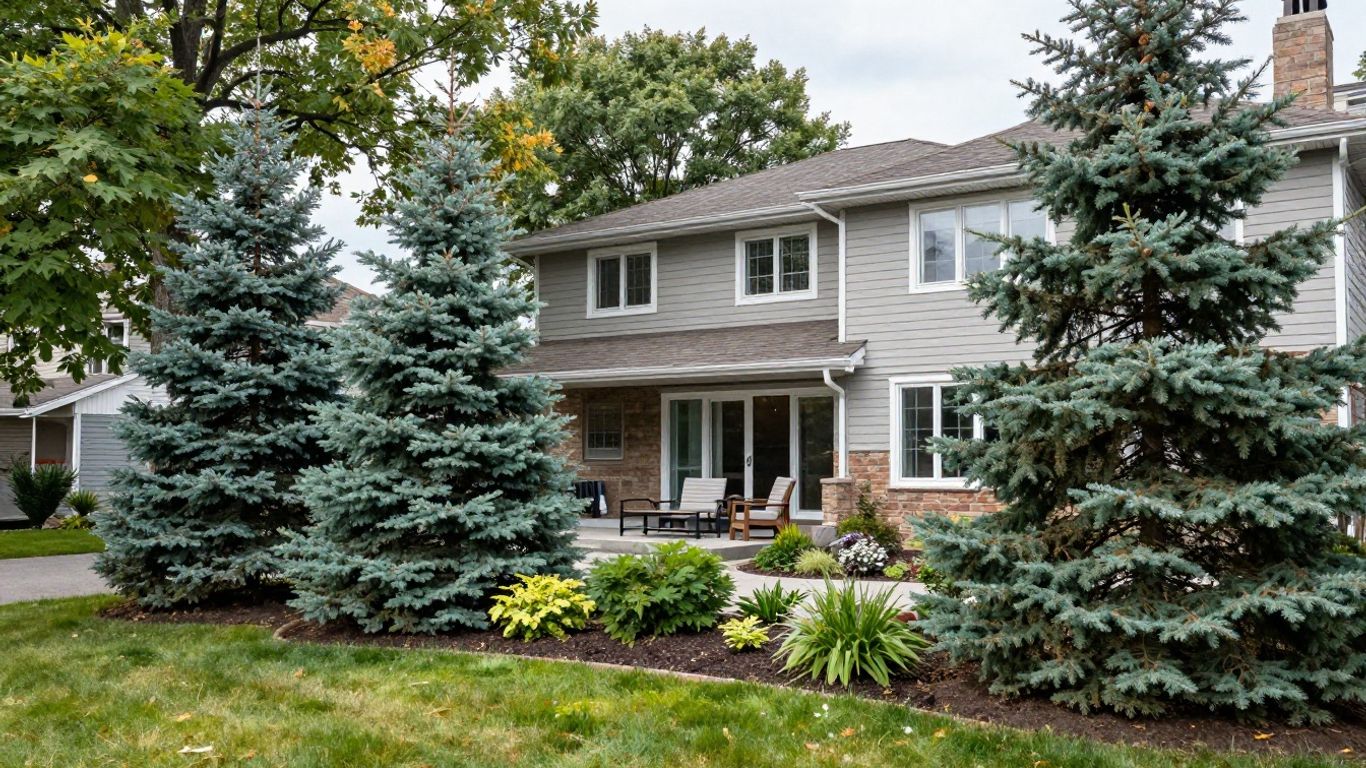
If you’re planning a complete backyard transformation, privacy trees work best when they’re incorporated into an overall landscape design rather than added as an afterthought. A well-planned landscape creates privacy while improving curb appeal, usability, and long-term property value. They can soften a fence line, shelter a patio from wind, and make a backyard feel more settled. In Ottawa, the best privacy trees that privacy shoppers choose must also tolerate cold winters, spring thaw, summer heat, and the compact conditions common around established homes.
A tree that grows quickly but struggles in Ottawa’s climate may leave gaps, thin out, or require replacement after a difficult season. Mature height and width are equally important. A narrow side yard needs a different solution from a large suburban lot, and the right choice should fit the property rather than simply promise the fastest possible coverage.
Privacy planting also affects the rest of the yard. Dense rows can cast shade on gardens, compete with lawns for moisture, and eventually press against fences or overhead wires. Before buying, homeowners should consider the view they want to screen, the direction of the sun, and how the planting will look from both sides of the property.
If you’re planning a new landscape or upgrading your backyard, choosing the right privacy trees from the beginning can save years of maintenance, replacement costs, and frustration.
Best Trees for Privacy in Ottawa Homes
Ottawa homeowners have several good trees for privacy, but no single species suits every backyard. Evergreen conifers are usually the first place to look when year-round screening is the priority, while the final decision depends on available room, soil, exposure, and desired maintenance. The options below are commonly considered for residential privacy planting in the region.
Eastern White Cedar
We often recommend Eastern White Cedar as part of a softscape landscaping project because it blends naturally with planting beds, shrubs, mulch, and lawns while creating an attractive year-round privacy screen. It has soft, scale-like foliage and can be maintained as a hedge or allowed to grow into a taller, more natural screen. It generally suits homeowners who want a familiar evergreen form that blends easily with lawns, gardens, and wood fencing.
Its performance depends heavily on moisture and exposure. Cedar can struggle in very dry conditions, especially when planted beside pavement or in a shallow strip of soil. Watering during establishment, adding mulch without touching the trunks, and allowing enough space between plants can help the row fill in without becoming crowded.
Emerald Cedar
Emerald cedar is valued for its narrow, upright shape and tidy appearance. It can work well where a homeowner wants privacy along a property line but has less horizontal room than a broad evergreen would need. Its rich green colour also gives a screen a consistent look through the colder months.
The narrow profile should not be mistaken for permission to plant too closely. Each tree still needs room for root development, air movement, and mature growth. A carefully measured row will usually look better over time than a tightly packed line that becomes stressed and difficult to maintain.
Norway Spruce
On larger Ottawa properties, Norway Spruce also works well around outdoor living spaces where homeowners want privacy without installing a traditional fence. This makes it suitable for larger yards and deeper planting beds.
Because it can become broad and imposing, Norway spruce is rarely the best fit for a narrow side passage. It should be planted away from structures and property boundaries with its mature spread in mind. Good drainage is helpful, particularly where snowmelt or heavy rain can collect.
White Spruce
White spruce is a hardy evergreen with a naturally conical form and good cold tolerance. It can provide structure and screening in an Ottawa landscape, particularly where a more traditional conifer shape is welcome. Young trees may take time to create a dense visual barrier, so expectations should be realistic.
White spruce looks most comfortable in an open, sunny location with adequate room around it. Lower branches can contribute to privacy as the tree develops, but the planting should not be squeezed between a fence and a walkway. A little extra room at installation can make future pruning and mowing much easier.
Colorado Blue Spruce
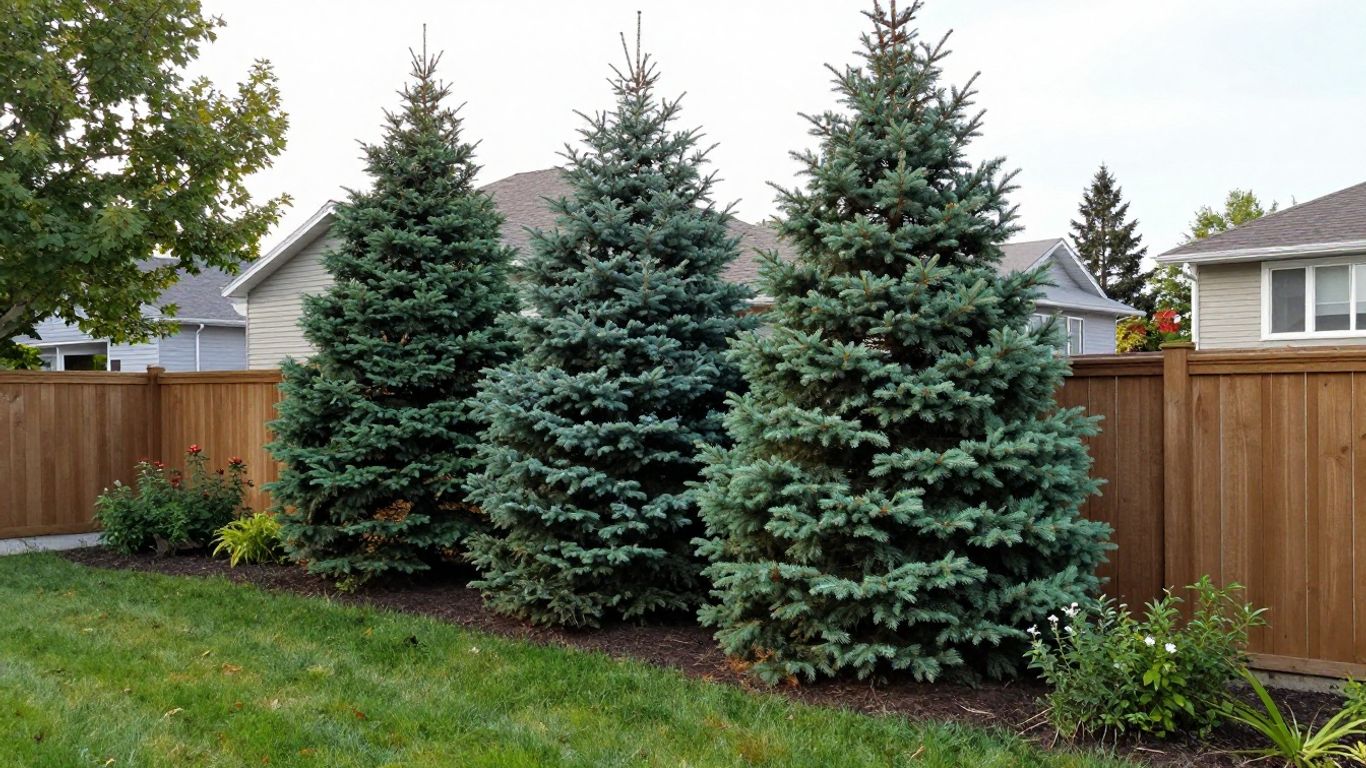
Colorado blue spruce is best known for its blue-green needles and strong architectural shape. It can bring colour contrast to a privacy planting rather than forming a uniform green wall. Used selectively, it may add visual interest at the end of a row or among compatible evergreens.
This tree needs careful placement because its mature form can be wider than expected. It is more suited to a spacious yard than a narrow urban boundary. Homeowners should also consider whether the site has enough sunlight to preserve a full, attractive shape.
Eastern White Pine
Eastern white pine is a graceful, fast-growing native conifer that can provide height and a softer texture. Its long needles and open branching create a lighter screen than dense cedar, which may be useful when the goal is filtered privacy rather than a completely solid barrier. It is a good candidate for larger properties with room to accommodate its eventual scale.
White pine is not a compact hedge plant. Its mature height and spread should be treated seriously before planting near a home, wires, or a neighbour’s yard. When space allows, it can contribute a natural backdrop that feels less formal than a clipped row.
Fast Growing Privacy Trees for Homeowners Who Want Results Sooner
The quickest growing trees for privacy are tempting when a backyard feels exposed. A faster rate can shorten the wait for screening, but it does not remove the need for suitable soil, watering, and correct spacing. Trees under stress rarely deliver the dense, healthy growth a homeowner expects, even if the species is known for growing quickly.
A useful way to compare fast-growing privacy trees is to look beyond the first few seasons. Ask how wide the tree becomes, whether it keeps foliage low on the trunk, and how much maintenance it may need when mature. A slightly slower tree that remains healthy and appropriately sized can provide better long-term privacy than an oversized option planted too tightly.
Growth also varies with nursery size, planting conditions, sunlight, moisture, and weather. Proper soil preparation and drainage have just as much impact on growth as the species itself. Trees planted in compacted or poorly drained soil often establish more slowly regardless of their expected growth rate. If your property struggles with standing water or saturated soil, addressing poor backyard drainage before planting privacy trees can significantly improve long-term growth and survival.
Evergreen Privacy Trees vs Deciduous Trees
Evergreen privacy trees retain their foliage through Ottawa’s winter, so they are the natural choice for year-round screening. They can block views during the months when patios are quiet and deciduous trees are bare. That coverage is particularly useful beside a busy street, a neighbouring driveway, or an outdoor seating area used in every season.
Deciduous trees bring a different set of advantages. They can provide summer shade, autumn colour, flowers, or a more open winter view that allows low sunlight into the yard. They may be appropriate when privacy is most important during the warmer months, and the homeowner wants a less enclosed feel outside the growing season.
The decision is not always either-or. Mixing ornamental grasses with evergreen privacy trees also adds seasonal interest while softening the appearance of a solid hedge. Varying heights and textures can also make the screen feel more natural, rather than creating a single dense wall that dominates the backyard.
How to Choose the Best Trees for Privacy in Your Backyard
Start with the view you want to change. Stand where privacy is needed and identify whether the problem is a neighbour’s upper window, a street-level sightline, or a broad view across the rear property. This helps determine whether you need a tall screen, a lower hedge, or a layered planting with trees and shrubs.
Next, think about how the space is used. A screen around a dining area may need to be dense at eye level, while trees along a rear boundary can be taller and more open beneath the canopy. A thoughtful backyard design guide can also help coordinate privacy planting with patios, walkways, gathering areas, and the practical flow of the yard.
Finally, consider the appearance from neighbouring properties and from inside the home. A row that looks attractive from the patio may look bare from the other side if the lower branches are lost. Mixing forms, repeating a restrained palette, and leaving enough room for healthy growth will create a screen that feels intentional rather than hurried.
Consider Yard Size, Sunlight & Soil Conditions
Privacy trees are living structures, so their success depends on the conditions beneath and around them. Measure the planting strip, observe sunlight through the day, and check whether water drains freely after rain. Ottawa properties can have compacted fill, shallow soil, or wet areas near downspouts, and those details can be more decisive than a tree’s advertised growth rate. If water pools after heavy rain or snowmelt, solve the drainage issue before planting. Addressing poor backyard drainage first helps privacy trees establish healthier root systems and reduces the risk of root rot.
Decide How Much Privacy You Need
Privacy goals should be specific rather than vague. Decide whether you need complete coverage, filtered views, or seasonal screening, and note the height at which the unwanted sightline occurs. This prevents overplanting and makes it easier to select trees that provide useful coverage without overwhelming the rest of the yard.
A narrow evergreen hedge may suit a side boundary, while a back lot may accommodate taller spruce or pine with a looser arrangement. For a more finished landscape, Ottawa softscape design can integrate trees with shrubs, flowers, and grass so the privacy screen feels like part of the garden rather than an isolated row.
Plan Proper Tree Spacing for Long-Term Growth
Spacing should be based on mature width, not the size of the nursery container. Trees planted shoulder to shoulder may appear effective at first, but overcrowding can reduce airflow, increase competition for water, and create a difficult pruning problem later. Leave enough room for each tree to develop its natural shape while still allowing the crowns to overlap visually.
A simple planning table can clarify the trade-offs before excavation begins:
| Planting approach | Privacy effect | Best suited to |
|---|---|---|
| Closely managed hedge | Formal, consistent coverage | Narrow boundaries with regular maintenance |
| Evenly spaced evergreens | Gradual, dependable screening | Typical residential property lines |
| Staggered mixed planting | Layered texture and varied coverage | Larger yards with room for design flexibility |
The table is only a starting point because actual spacing depends on species, stock size, soil, and the desired finished look. Marking the centre points on the ground before planting makes it easier to spot conflicts with fences, gates, utilities, and mature trees.
Common Mistakes When Planting Privacy Trees
One common mistake is choosing trees based only on height or growth speed. A tree that becomes too wide can crowd a walkway, shade a garden, or create friction at the property line. Another is ignoring the root zone and planting directly over compacted ground, beneath utility lines, or beside foundations without considering future growth.
Planting too closely is another frequent problem. Homeowners understandably want immediate coverage, but crowded trees compete for moisture and light as they mature. A row may fill quickly and then decline, leaving thin foliage, dead branches, and expensive replacement work. Patience at the beginning is often less costly than correction later.
After planting, inconsistent watering can undermine an otherwise good plan. Seasonal watering, mulching, pruning, and routine inspections all help privacy trees establish healthy root systems and maintain dense foliage. Following a regular seasonal garden maintenance plan can also help identify drought stress, winter damage, or pest issues before they become serious problems. Mulch should conserve moisture without touching the trunk, and the planting should be inspected regularly for leaning, drought stress, winter injury, or damage from equipment.
Why Professional Tree Selection and Planting Makes a Difference
Professional help is useful when the site has tight access, complicated grading, mature roots, overhead wires, or unclear property boundaries. A careful assessment can match tree form and mature size to the actual planting area instead of relying on a quick visual choice at a garden centre. It can also reveal drainage or compaction issues that need attention before the trees arrive.
Installation quality matters as much as species selection. Correct depth, stable positioning, soil preparation, watering, and mulch placement all affect how a tree begins its life in the yard. For broader landscaping plans, Ottawa landscaping services can connect privacy planting with the surrounding outdoor space and the practical work needed to prepare it.
Local rules may also affect work around protected trees, property lines, or construction areas. Ottawa homeowners planning a larger project can review this Ottawa tree protection guide before digging or removing existing vegetation. A professional team can then help coordinate the planting plan with access, safety, drainage, and the finished appearance of the property.
Need Help Choosing the Right Privacy Trees?
Choosing the best privacy trees isn’t just about selecting the fastest-growing species. Soil conditions, available space, drainage, sunlight, and mature tree size all play a major role in how well your trees perform over the years. At KJ Landscape & Design, we help Ottawa homeowners select and plant privacy trees that complement their landscape and thrive in the local climate.
Whether you’re creating privacy around a patio, pool, or entire backyard, our team can recommend the right trees and install them correctly for long-term success.
Call +1 (613) 229-0213 or contact our team to schedule your consultation and start creating a more private, beautiful backyard.
Conclusion
The best privacy trees for an Ottawa yard are the ones that fit the site as they mature, not simply the ones that promise the fastest initial growth. Compare evergreen and deciduous traits, measure your space, check sunlight and soil, and give each tree room to establish. With thoughtful planning and proper planting, a living screen can provide privacy, structure, and a more comfortable backyard for many years.
Frequently Asked Questions
What are the best privacy trees for Ottawa?
Eastern white cedar, Emerald cedar, Norway spruce, white spruce, Colorado blue spruce, and eastern white pine are all options to consider, depending on mature size, soil, sunlight, and the amount of privacy required.
Which privacy trees grow the fastest?
Growth varies by species and site conditions, but some cedars, spruces, and pines can establish height relatively quickly. Healthy roots, adequate moisture, and proper spacing are essential for achieving their expected growth.
Are evergreen privacy trees better than deciduous trees?
Evergreens provide screening throughout the year, while deciduous trees offer seasonal shade, colour, and a more open winter appearance. The better choice depends on when privacy is needed and how enclosed the yard should feel.
How far apart should privacy trees be planted?
Spacing should reflect each tree’s expected mature width rather than its current nursery size. The exact distance depends on the species, desired density, available room, and whether the planting will be clipped as a hedge.
Can privacy trees grow in shade?
Some trees tolerate partial shade, but most develop stronger, denser growth with suitable sunlight. Observe the area throughout the day and select species that match the actual exposure instead of assuming a shaded site will support any evergreen.
When is the best time to plant privacy trees in Ottawa?
Spring and early fall are commonly practical planting periods because temperatures are moderate and soil moisture is often more dependable. Newly planted trees still need regular watering during dry weather and careful establishment before winter.
Do privacy trees need regular maintenance?
Yes. Watering during establishment, monitoring for stress, maintaining mulch correctly, and occasional pruning can keep a privacy screen healthy. Mature trees should also be watched for conflicts with fences, structures, paths, and overhead utilities.