
By KJ Landscape & Design Team | Reviewed by KJ Landscape & Design’s Certified Landscaping & Tree Removal Specialists | Updated August 2026
Key Takeaways
Choosing a front-yard tree in Ottawa is less about picking the prettiest specimen and more about matching the tree to the site, the house, and the amount of care you want to provide.
- Choose a species that suits Ottawa’s winter conditions and your available space.
- Check mature height, canopy spread, roots, overhead lines, and underground utilities before planting.
- Use evergreens for structure and privacy, or deciduous trees for seasonal colour and shade.
- Good soil preparation, watering, and mulch matter as much as the tree species.
- Professional planning can help prevent expensive pruning, removal, and hardscape repairs later.
Why Choosing the Best Front Yard Tree Matters in Ottawa
The best front yard tree for an Ottawa home should do more than improve curb appeal. It should tolerate Ottawa’s harsh winters, changing soil conditions, road salt, and freeze-thaw cycles while complementing your home’s size and landscape design. At KJ Landscape & Design, we’ve helped homeowners throughout Ottawa select and plant trees that provide lasting beauty without creating future maintenance problems. Choosing the right species from the beginning helps avoid expensive pruning, root damage, or premature removal.
What Makes a Good Tree for a Front Yard?
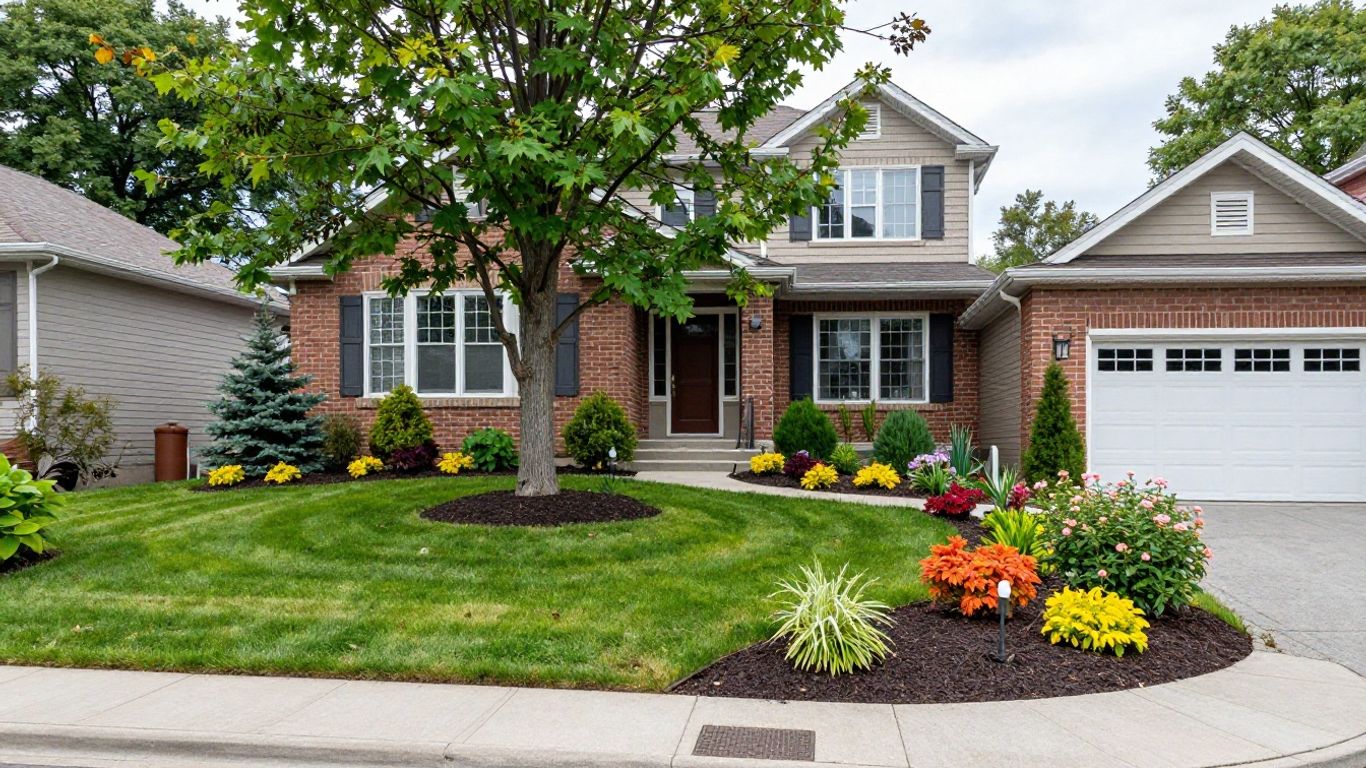
A good tree for front yard planting has a mature size that suits the lot, a reasonably tidy growth habit, and roots that are unlikely to interfere with nearby pavement or foundations. It should also tolerate the light, moisture, and soil conditions already present rather than requiring constant correction. Look for a tree with attractive structure in more than one season, whether that comes from spring flowers, fall foliage, textured bark, or evergreen colour. The best front yard tree is usually the one that fits the site quietly and reliably. Before choosing a tree, consider how it fits into your entire landscape. The right placement should complement your lawn, gardens, walkways, patios, and existing hardscape rather than compete with them. A well-planned landscape design plan helps ensure every element works together.
Common Front Yard Tree Mistakes Homeowners Make
Many planting problems begin before the tree ever reaches the ground. Homeowners may choose a tree based on its nursery size, without picturing its mature canopy, or place it too close to the house because the planting bed looks empty at first. Others overlook salt exposure near a driveway, compacted soil beside a sidewalk, and the direction of afternoon sun. Before changing a front yard, it is also sensible to review Ottawa’s tree protection bylaw guide, particularly when existing mature trees or removal plans are involved.
A simple site check can prevent years of corrective pruning. Many homeowners also underestimate how roots interact with patios, retaining walls, interlock driveways, and walkways. Planning around existing hardscape helps avoid costly repairs years later, especially when incorporating Ottawa hardscaping services into the overall landscape. Measure the planting area, identify overhead wires, locate underground services, and note where snow is piled during winter. It is easier to adjust a design on paper than to remove an established tree that has outgrown its setting.
Best Front Yard Trees for Ottawa Homes
Ottawa homeowners have several attractive options, but no single species suits every property. Serviceberry offers a relatively refined form, spring flowers, edible fruit for wildlife, and fall colour, making it useful where a smaller tree is desired. Paper birch can bring bright bark and a light canopy, while a disease-resistant elm cultivar may provide a stronger shade-tree presence where the lot has room. Native options such as red maple, sugar maple, or pagoda dogwood can also work well when their eventual size and soil preferences match the site.
For a small front yard, consider compact ornamental trees such as serviceberry, pagoda dogwood, or a carefully selected crabapple. Medium and large yards may accommodate a maple or elm, but these should be placed far enough from the home, driveway, and utilities to allow the canopy to develop naturally. Regional selection guidance can add another perspective on matching tree size, form, and purpose to a front yard; this front-yard tree selection guide is a useful starting point.
Best Front Garden Trees for Year-Round Curb Appeal
The best front garden trees do not need to look identical in every season. A deciduous tree can provide delicate spring flowers, summer shade, and vivid autumn colour, then reveal an attractive branching pattern in winter. Evergreens contribute dependable structure when flower beds are dormant, especially around an entrance or along the edge of a lot. Combining one focal tree with lower plants and mulch usually looks more intentional than filling every open space with several competing specimens.
Think about what the tree will look like from the street, from the front windows, and from the entrance path. A tree with a clear trunk and lifted canopy can preserve sightlines, while a multi-stemmed serviceberry or dogwood can create a softer garden character. Integrating trees with other living elements is part of a balanced softscape garden design, where colour, texture, and structure work together instead of being chosen separately.
Healthy garden beds help ornamental trees establish stronger roots while improving moisture retention and reducing weeds. Applying quality mulch installation in Ottawa around new trees also protects soil moisture and suppresses weed growth.
Best Front Lawn Trees for Shade and Privacy
Front lawn trees can provide welcome shade, but privacy usually comes from a combination of trees and shrubs rather than one oversized specimen. A medium-canopy maple may shade a seating area or reduce afternoon glare, while columnar evergreens can screen a side-facing window without taking up much width. Where privacy is the main goal, consider sightlines from neighbouring homes and the height at which screening is actually needed. Planting several suitable-sized trees with space between them is often healthier than creating a dense wall.
Shade also changes the lawn beneath a tree. Grass may thin under a dense canopy, particularly where soil is dry or compacted, so a planted bed or shade-tolerant groundcover can be a better long-term solution. If your lawn begins struggling beneath mature trees, overseeding with shade-tolerant grass varieties can help restore healthy turf. Professional grass seeding services can improve lawn density in shaded areas. Keep the tree’s mature spread in mind, since a small nursery tree can eventually shade a large portion of the front yard.
Nice Trees for Front Yard Landscaping
Nice trees for front yard landscaping should fit the mood of the home as well as the physical conditions of the property. A formal house may suit a clean, upright tree, while a cottage-style garden can benefit from a looser multi-stemmed form. Ottawa’s long winter also makes bark, branching, and evergreen foliage valuable design features. The strongest planting plans use a few dependable elements rather than relying on constant seasonal replacements.
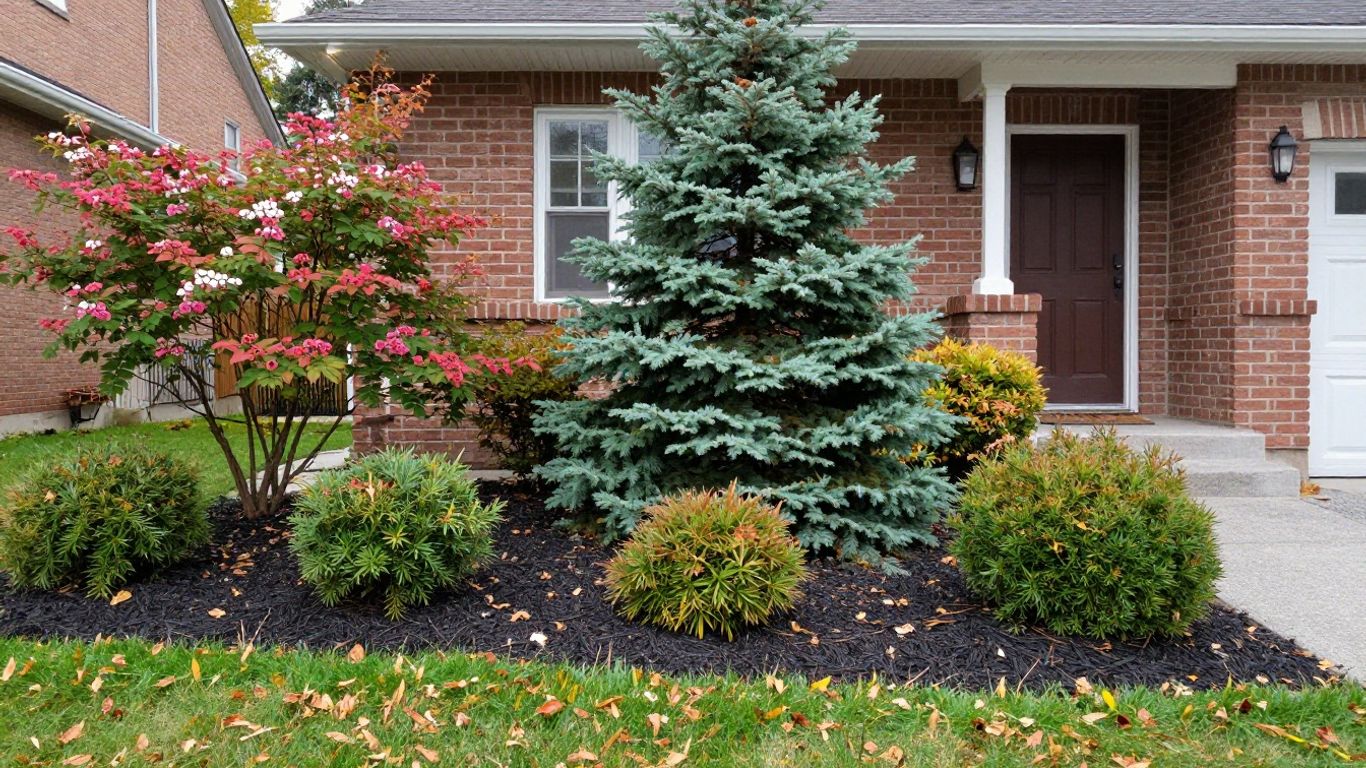
The choice between evergreen and deciduous planting is not simply a matter of appearance. It affects light levels, winter interest, leaf cleanup, and the way the garden changes through the year.
Adding natural stone borders or garden edging around newly planted trees helps define planting beds while protecting trunks from lawn equipment. Explore these garden edging ideas for additional inspiration.
Evergreen vs. Deciduous Trees: Which Should You Choose?
Evergreen trees retain foliage through winter and can provide screening when deciduous trees are bare. They are useful near property edges, but their mature width and the amount of shade they cast should be considered carefully. Deciduous trees often offer more seasonal variety and may allow welcome winter sunlight into front windows once their leaves fall. For many Ottawa homes, a combination works best: one deciduous focal tree with evergreen support plants nearby.
Evergreens also need protection from drying winter winds and road salt, depending on their location. Deciduous trees may create more autumn work but can offer lighter canopies and stronger seasonal colour. The right balance depends on whether your priority is privacy, sunlight, shade, or a more traditional garden rhythm.
Native Trees vs. Ornamental Trees
Native trees are adapted to regional conditions and can support local insects and birds, though “native” does not automatically mean suitable for every front yard. Ornamental trees can provide distinctive flowers, foliage, or form and may be ideal when space is limited. The practical question is whether the selected tree can handle the particular combination of soil, exposure, salt, and available room. A hardy ornamental tree in the right place may perform better than a native tree planted in unsuitable conditions.
A mixed planting can provide both ecological and visual benefits. Choose a reliable structural tree, then add smaller flowering trees, shrubs, and groundcovers that extend interest around it. This approach also makes the garden less dependent on one species and gives you more flexibility if conditions change.
Combining native trees with ornamental shrubs creates layered landscapes that support pollinators while maintaining year-round curb appeal. Integrating professional softscape landscaping creates a more balanced and visually appealing front yard.
How to Choose Great Trees for Front Yard Landscaping
Great trees for front yard landscaping begin with measurements and observations, not just a trip to the garden centre. Note where the sun falls in the morning and afternoon, how water moves after rain, and where snow, salt, and foot traffic accumulate. Then compare those conditions with the tree’s mature dimensions and care needs. Mature size matters most because it determines whether the tree will remain comfortable in the space for decades.
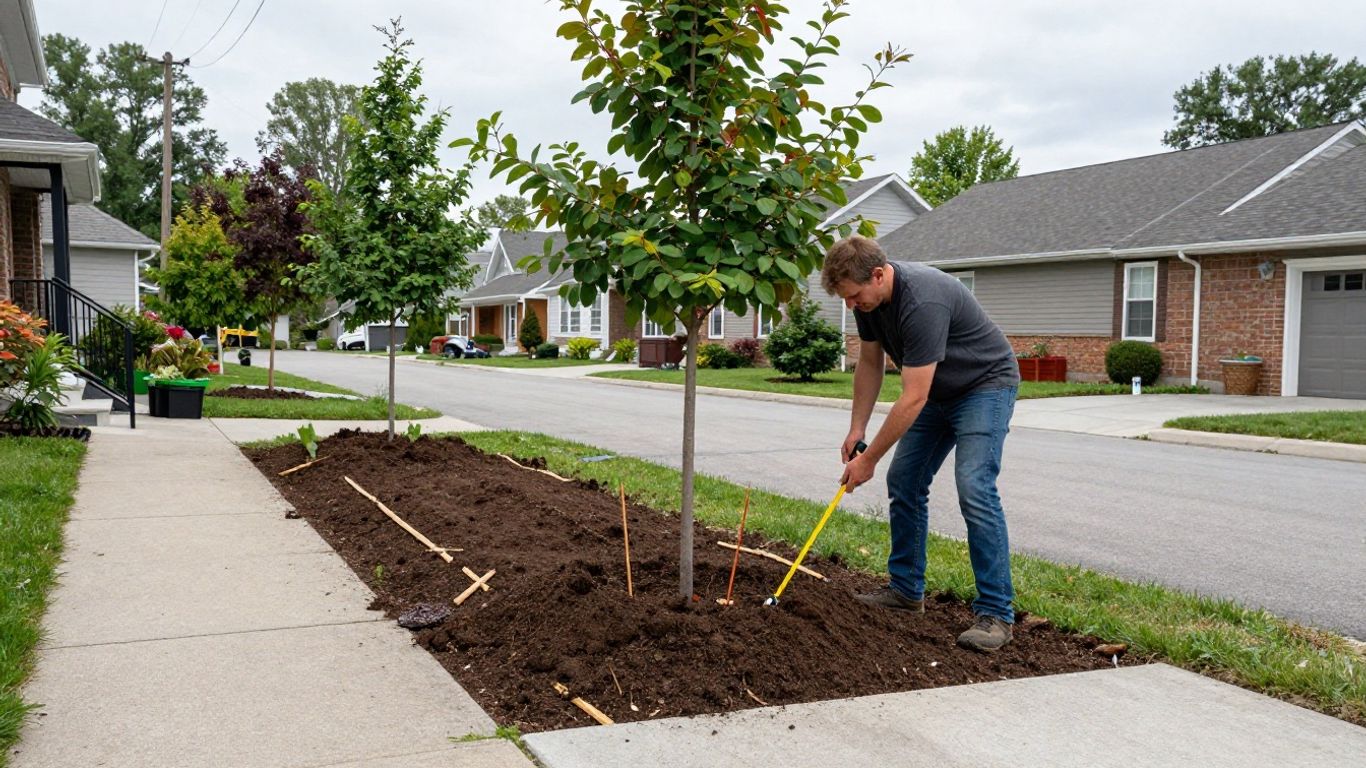
A scaled sketch is surprisingly useful. Mark the home, driveway, sidewalk, utility lines, and planting bed, then draw the expected canopy rather than the small pot-sized tree you see at the nursery.
Consider Mature Size, Roots & Distance from Your Home
Tree labels usually provide mature height and spread, but those numbers need to be interpreted in relation to the property. Consider the distance to the roofline, windows, foundation, driveway, sidewalk, fences, and overhead wires. Surface roots are more likely to become troublesome where soil is shallow or compacted, and large branches can create future clearance issues even when the trunk is planted at a reasonable distance. A tree with a narrower mature form may be a better choice than a naturally large species that will need repeated reduction pruning.
The following checklist keeps the decision grounded in the actual site:
- Measure the planting bed and the distance to nearby hard surfaces.
- Estimate the tree’s mature height and canopy spread, not its nursery size.
- Check overhead wires and identify underground utility locations before digging.
- Consider winter salt, snow storage, reflected heat, and pedestrian traffic.
Planning tree placement early also reduces the likelihood of future conflicts with driveways, patios, and retaining wall installation projects.
After these checks, choose a tree that can grow into its space without regular reshaping. A little extra room at planting time is usually an advantage, not wasted space.
Match Your Tree to Ottawa’s Soil, Sun & Drainage Conditions
Ottawa properties can have heavy clay, sandy fill, compacted construction soil, or areas that stay wet after rainfall. Observe the site through more than one season if possible, and pay attention to whether water drains quickly or collects near the foundation. Most trees need adequate moisture but do not thrive when their roots remain saturated. Sun exposure matters too: a tree that tolerates full sun may struggle in a narrow bed beside a hot wall, while a shade-loving selection may lose quality in an exposed lawn.
Use soil improvement carefully rather than filling a planting hole with a small pocket of rich soil surrounded by poor ground. Loosen the wider planting area, keep the root flare at the correct height, and avoid burying the trunk. If the conditions are unclear, a soil test or professional site assessment can help narrow the options.
Once the tree is planted, watch how it responds to the site instead of assuming the original plan needs no adjustment. Leaf scorch, standing water, weak growth, or repeated dieback may point to a mismatch in drainage, exposure, or watering.
Poor drainage is one of the most common reasons newly planted trees struggle during establishment. If water regularly collects in your yard, addressing poor backyard drainage before planting can significantly improve long-term tree health.
Planting & Maintaining Low-Maintenance Front Yard Trees
Low-maintenance trees are not maintenance-free, especially during their establishment period. The first few years determine whether roots spread into surrounding soil and whether the tree develops a stable structure. Planting depth, watering, mulch, and protection from mechanical damage all matter. A well-planted tree generally needs less intervention later than one that begins life stressed or poorly positioned.
Ottawa’s spring can be wet and slow to warm, while summer may bring stretches of heat and drought. Timing the work around soil conditions is therefore more useful than following a rigid calendar date. The aim is to give the roots time to establish without placing the new tree in avoidable stress.
Best Time to Plant Trees in Ottawa
Early fall is often a comfortable planting period because the soil remains warm while cooler air reduces moisture loss from the canopy. Spring can also be suitable once the soil is workable and no longer saturated, particularly for trees that need a long growing season to establish. Avoid planting into muddy soil, since walking and equipment can compact the root zone. Container-grown trees offer more flexibility, but they still need prompt watering and careful handling.
Before beginning major spring work, wait until the ground has dried enough to support foot traffic and equipment. This guide to starting spring landscaping explains why rushing onto wet soil can create compaction and erosion problems. A calm start is better for both the lawn and the tree.
Preparing the planting area with quality soil gives roots a stronger foundation for long-term growth. Adding quality topsoil in Ottawa can improve drainage and root development where existing soil conditions are poor.
Watering, Mulching & Long-Term Tree Care
Newly planted trees need consistent moisture while their roots move into the surrounding soil. Water deeply enough to moisten the root ball and nearby soil, then adjust frequency according to rainfall, temperature, and drainage. A broad ring of organic mulch helps moderate soil moisture and temperature, but keep it several centimetres away from the trunk so the bark stays dry. Inspect stakes, ties, and the trunk regularly, removing supports once the tree can stand securely on its own.
Long-term care is mostly preventive. Prune only when there is a clear reason, remove damaged or crossing branches, and avoid topping the tree to control its height. Seasonal maintenance can include spring mulching, summer pruning, and fall preparation; seasonal garden maintenance can be useful for homeowners who prefer a consistent care schedule.
Why Professional Tree Selection & Planting Saves Money
Professional planning can identify problems that are easy to miss from ground level, including poor drainage, conflicting utility lines, weak structure, and a mature canopy that will eventually block access or windows. It also helps connect the tree choice with the rest of the landscape, rather than treating the planting as an isolated purchase. That early attention can reduce the likelihood of costly removal, hardscape repairs, or repeated pruning.
KJ Landscape & Design provides custom landscape design and build services from initial consultation to final walkthrough, which can be useful when tree placement is part of a wider property plan. A coordinated design considers trees, shrubs, grass, paths, and other outdoor elements together. It can also make the installation sequence clearer and reduce avoidable rework.
For established trees or properties with possible hazards, KJ Landscape & Design offers tree health assessments, pruning, disease management, and hazard evaluations as part of its tree removal and arborist services. KJ Landscape & Design also provides expert seasonal gardening services, including planting, mulching, summer pruning, and fall preparation. Paying for the right advice at the beginning is often less expensive than correcting a tree that was planted in the wrong place.
Conclusion
The best front yard tree for an Ottawa home is one that suits the site today and still fits when it reaches maturity. Consider size, roots, light, soil, drainage, salt, and year-round appearance before choosing a species. With sound planting and steady early care, a modest tree can become one of the most lasting and welcoming features of the property.
Call +1 (613) 229-0213 or contact KJ Landscape & Design today to schedule your free consultation.
Frequently Asked Questions
What is the best front yard tree for a small Ottawa property?
Serviceberry, pagoda dogwood, and compact crabapple varieties can be good choices when their mature height and spread fit the planting area. Always confirm the specific cultivar’s dimensions before buying.
Which trees are best for front-yard privacy?
Columnar evergreens and appropriately spaced medium-sized trees can provide privacy without overwhelming the yard. Use several plants at different heights rather than relying on one large tree.
Should I choose an evergreen or deciduous tree?
Evergreens offer winter screening and structure, while deciduous trees often provide better seasonal colour and more winter sunlight. A combination can provide the advantages of both.
How far should a tree be planted from a house?
The appropriate distance depends on the tree’s mature canopy, root pattern, and the home’s features. Use the expected mature spread rather than the tree’s current nursery size when planning.
When should trees be planted in Ottawa?
Early fall and workable spring conditions are commonly suitable. Avoid planting in saturated soil, and provide reliable watering during the establishment period.
How often should a newly planted tree be watered?
Watering depends on rainfall, soil type, temperature, and drainage. Check the soil around the root ball and water deeply when it begins to dry rather than following a fixed schedule.
How can I keep front-yard tree maintenance low?
Choose a tree suited to the site, leave enough room for its mature size, prepare the soil well, mulch correctly, and prune only when needed. Good planning reduces corrective work later.